


Cultivating Change: WEE & AI Project Boosts Nutrition, Livelihoods, and Education in Afar
The Ethiopian Civil Society Coalition for Scaling Up Nutrition (ECSC SUN) has completed and handed over the Women’s Economic Empowerment & Adolescent Initiative (WEE & AI) pilot project in, Asayita Woreda, Afar Region. The project, implemented since February 2024, has delivered significant progress in nutrition, livelihoods, gender equality, and school-based learning. Improving Household Nutrition and Livelihoods During a field visit to selected households, delegates, constituted in partnership with Save the Children, Amref Health Africa, and Afar regional and Woreda structures, observed the positive results of livelihood inputs provided through the project. Families in Corodura Kebele, Asayita Woreda, received chickens, milking goats, vegetable seeds, and agricultural tools tailored to their needs. As a result, households reported increased poultry production, higher egg consumption, and improved access to diverse vegetables cultivated in home gardens. Project participants demonstrated innovative approaches to overcoming local challenges, including rainwater harvesting and the use of natural Neem-based pest control solutions. These efforts have contributed to stronger food security and more diversified diets for women, children, and adolescents. Promoting Gender-Responsive Development The project’s gender model family approach has helped shift traditional norms by encouraging men to share household responsibilities more equitably. Families such as that of Asaweka highlighted how shared childcare and domestic tasks are easing women’s workloads and promoting more balanced family roles. School Gardening Inspires Hands-On Learning At Wanis Primary School, a thriving school garden has become a standout achievement of the pilot. Students and teachers cultivate a variety of vegetables while learning practical agricultural skills. The school has also used the garden as a platform for awareness-raising on diversified diets, influencing both their families and the wider community. The Woreda Education Office expressed commitment to further strengthening school gardening efforts and linking them with school meal programs to ensure students benefit from nutritious, locally grown food. Strengthened Government Ownership and Next Steps During the handover workshop, the Asayita Woreda Livestock, Agriculture and Natural Resources Development Office and the Women & Social Affairs Office pledged to sustain the progress and expand best practices to additional kebeles. Government partners received certificates of appreciation in recognition of their leadership and collaboration throughout the project period. Officials and community members also acknowledged ongoing challenges, including seasonal variations in the Awash River and environmental pressures such as high temperatures and pests. While solar-powered irrigation technologies remain costly, project stakeholders encouraged continued adoption of low-cost, community-led solutions to maintain gardens and production. A Foundation for Sustainable Growth ECSC SUN National Lead, Mr. Abebe Bimerew, emphasized that the project’s success reflects strong community commitment and effective multi-sector collaboration. He encouraged stakeholders to continue strengthening nutrition-sensitive, gender-responsive, and climate-resilient practices built under the WEE & AI initiative. The handover marks an important step toward sustaining and scaling the impact of integrated nutrition and livelihood interventions across Afar.
Read More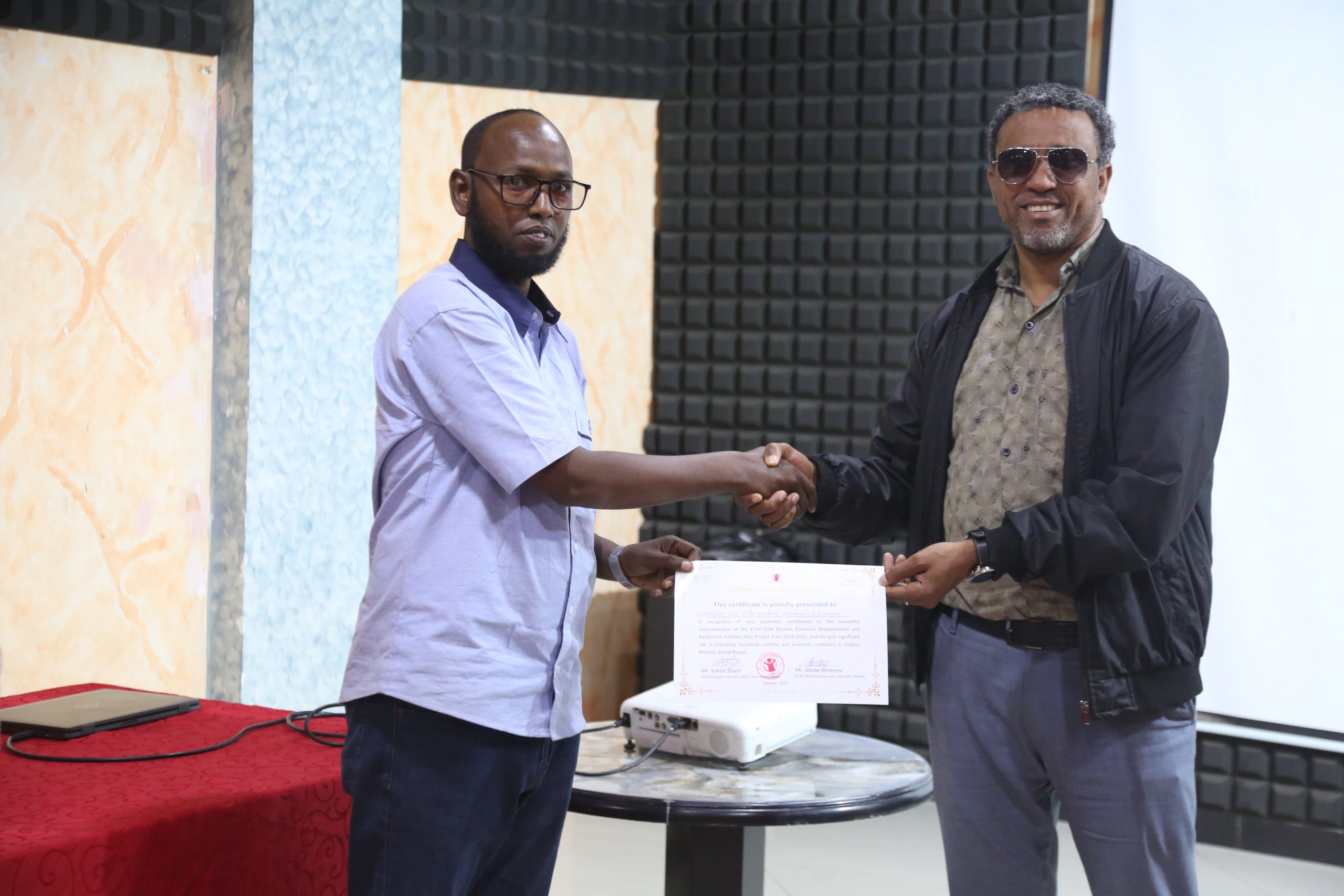
Empowering Women, Strengthening Livelihoods
ECSC SUN successfully conducted the official handover ceremony of the Women’s Economic Empowerment and Adolescent Initiative (WEE & AI ) Pilot Project in Jigjiga, Somali Region—marking a significant milestone in advancing sustainable, nutrition-sensitive livelihoods for women and communities. During the ceremony, the ECSC-SUN team delivered a comprehensive presentation outlining: Key achievements, with evidence of positive behavioral change and improved livelihoods among target communities Challenges encountered throughout implementation Strategic way forward, emphasizing sustainability and the potential to scale the initiative to additional woredas The Somali Regional Livestock and Agriculture Bureau, together with woreda-level sector offices, provided essential technical guidance and coordination. Their strong collaboration and field-level engagement were critical to the success of the pilot. Impact Highlight: Goljano Woreda Goljano Woreda stands out as a powerful example of transformation. Initially, poultry production was unfamiliar to the community, and acceptance of poultry inputs was low. Through consistent Social and Behavioral Change Communication (SBCC) efforts—paired with Gender Model Family (GMF) training, which strengthens gender relations and promotes joint household decision-making—significant social and behavioral shifts began to take shape. Today, households in Goljano are actively engaging in poultry production and consuming eggs, leading to better nutrition, improved gender collaboration, and increased income opportunities for families. Recognition of Exceptional Partners ECSC SUN awarded Certificates of Recognition to key contributors at both regional and woreda levels. These individuals and institutions demonstrated exemplary commitment, collaboration, and professionalism throughout the project cycle, playing a vital role in achieving the pilot’s outcomes. Official Project Handover The WEE & AI pilot project was formally transferred to the respective regional and woreda government authorities. This transition reinforces local ownership and opens the door for potential expansion to additional woredas. This moment represents a shared achievement—driven by collaboration, innovation, and a collective commitment to strengthening women’s economic empowerment and improving nutrition across the Somali Region. #ECSCSUN #WEE &AI #SomaliRegion
Read More
